TOSHIBA EM-290 Microphone 70S
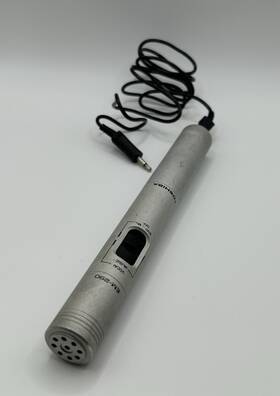
( Brand: Toshiba ), ( Manufacturer Part Number: EM-290 ), ( Part Type: Microphone ), ( Form Factor: Condenser Microphone ), ( Country Of Origin: Japan )
Review TOSHIBA Vtg Rare Microphone Late 70s Untested
The **Toshiba EM-290** is a rare and highly sought-after vintage microphone from the 1970s, embodying the innovative spirit of analog recording technology from an era when precision engineering and bold design were paramount. Crafted with meticulous attention to detail, this dynamic microphone was originally developed for professional studio use, particularly in broadcasting and live sound applications, where its robust build and clear, articulate sound made it a reliable choice. The EM-290 features a classic **cardioid polar pattern**, ensuring minimal pickup of off-axis noise while delivering a rich, natural tone with excellent transient response ideal for vocals, acoustic instruments, and speech work. Its **pressure-gradient design** with a single moving-coil element produces a smooth frequency response, with a slight emphasis in the midrange that enhances vocal clarity and instrumental detail without overpowering the listener. The microphone s **metallic finish**, likely in a polished chrome or brushed aluminum casing, exudes a retro aesthetic that appeals to audiophiles and collectors, while its **durable construction** including a sturdy metal grille and robust internal components reflects Toshiba s commitment to longevity in an era before modern plastics dominated manufacturing.
One of the most intriguing aspects of the EM-290 is its **historical significance**, as Toshiba was a major player in the Japanese electronics industry during the 1970s, competing with giants like Neumann and Shure. While not as widely recognized as some of its Western counterparts, the EM-290 was a well-regarded tool in its time, often favored for its **consistency and reliability** in demanding environments. Its **XLR connector** and **3-pin male output** are indicative of the era s professional standards, designed to integrate seamlessly with vintage mixing consoles and tape machines. The microphone s **internal circuitry** likely includes a high-quality transformer and a well-shielded cable, ensuring minimal interference and a clean signal path a hallmark of analog recording quality. For enthusiasts, the EM-290 offers a tangible connection to a bygone era of analog sound, where every component was hand-tuned for optimal performance.
Today, the EM-290 is a **highly collectible vintage microphone**, prized by audiophiles, musicians, and historians of audio technology. Its **unique combination of Japanese craftsmanship and mid-century design** makes it a standout piece in any collection, while its **authentic analog warmth** adds a distinctive character to recordings that modern microphones often lack. Whether used for studio sessions, live performances, or as a conversation piece, the EM-290 carries with it the legacy of a time when technology was both cutting-edge and artisanal. For those fortunate enough to own one, it serves as both a functional tool and a piece of audio history a testament to the enduring appeal of well-made, vintage equipment.
### **Pros and Cons of Buying a Toshiba EM-290 Vintage Microphone (1970s)**
#### **Pros**
1. **Historical and Collectible Value** The Toshiba EM-290 is a rare and sought-after vintage microphone, particularly among audiophiles and collectors. Its age and craftsmanship make it a unique piece, potentially appreciating in value over time.
2. **Distinctive Sound Character** Vintage microphones often have a warm, natural tone that modern microphones may lack. The EM-290, being a dynamic microphone, is known for its smooth, mid-focused response, which can add a classic touch to recordings, especially for vocals, acoustic instruments, or broadcast applications.
3. **Durability and Build Quality** Many vintage microphones from the 1970s were built to last, with robust construction and high-quality materials. The EM-290, as a professional-grade microphone, likely features sturdy metal components and reliable internal wiring.
4. **Compatibility with Modern Equipment** While it may require an adapter (e.g., XLR to modern connector), the EM-290 s output is compatible with most modern audio interfaces, mixers, and recording setups. Some users may need to source a suitable cable or phantom power adapter.
5. **Aesthetic Appeal** The EM-290 s retro design adds character to a studio or recording space. Its vintage appearance can be a conversation piece and align with a nostalgic or analog-focused workflow.
6. **Potential for Customization** Some vintage microphones can be restored or modified by skilled technicians. If the EM-290 is in poor condition, a restoration could breathe new life into it, enhancing both its performance and appearance.
7. **Niche Market Demand** For those involved in vintage audio collecting, broadcasting, or analog recording, the EM-290 may be a desirable addition to a collection or a specialized setup.
---
#### **Cons**
1. **Condition and Reliability Risks** Vintage microphones, especially those from the 1970s, may suffer from wear and tear. Common issues include frayed wires, corroded connections, damaged cables, or failing internal components. Buying used means accepting the possibility of hidden defects.
2. **Lack of Modern Features** Unlike contemporary microphones, the EM-290 lacks built-in features such as switchable patterns, pad reduction, or digital signal processing. Its fixed response may limit flexibility in certain recording scenarios.
3. **Maintenance and Repairs** Finding a technician familiar with vintage Toshiba microphones can be challenging. Parts may be obsolete, and repairs could be costly or difficult to source. Regular maintenance may be necessary to keep it in working order.
4. **Phantom Power Dependency** While the EM-290 is likely a dynamic microphone (not requiring phantom power), some vintage mics may have unexpected power requirements. Always verify compatibility with your audio interface before purchase.
5. **Limited Availability of Spare Parts** If the microphone fails, replacing specific components (e.g., the cartridge, wiring, or capsule) may be impractical or impossible without sourcing from a specialist or restoring it entirely.
6. **Potential for Overpaying** Due to its rarity, the EM-290 may be priced higher than its actual functional value. Buyers should research comparable vintage mics and ensure they are paying a fair price, especially if the microphone is not in pristine condition.
7. **Compatibility with Digital Workflows** While possible, using a vintage mic in a fully digital setup may require additional gear (e.g., analog-to-digital converters, preamps) to achieve optimal results. This adds complexity and cost to the setup.
8. **No Warranty or Guarantee** Purchasing a used vintage microphone typically means no return policy or warranty. Buyers must accept the risk of the mic not functioning as expected.
---
### **Conclusion**
The Toshiba EM-290 is a fascinating piece of audio history with distinct sonic qualities and collectible appeal. It offers a unique alternative to modern microphones for those seeking a vintage sound or a nostalgic aesthetic. However, its purchase comes with significant trade-offs, including potential reliability issues, higher maintenance demands, and limited modern functionality.
For **serious collectors, audiophiles, or enthusiasts** who prioritize character and history over convenience, the EM-290 could be a worthwhile investment provided it is thoroughly inspected and restored if necessary. For **casual users or professionals** who rely on consistent performance and modern features, a contemporary microphone may be a more practical choice.
---
### **Recommendation**
- **Buy if:** You are a collector, enjoy the sound of vintage microphones, and are prepared to invest time and money in restoration/maintenance. Consider purchasing from a reputable seller who offers a return policy or inspection.
- **Avoid if:** You need a reliable, low-maintenance microphone for professional use, prefer modern features, or cannot justify the potential risks and costs associated with vintage gear.
- **Alternative Approach:** If you re drawn to the EM-290 s sound but concerned about reliability, consider renting or borrowing one for a project before committing to a purchase. Alternatively, explore modern microphones with similar tonal characteristics (e.g., certain dynamic mics like the Shure SM7B or Neumann U87) that offer better support and longevity.
Ultimately, the EM-290 is a mic for the dedicated one that rewards patience and passion but demands respect for its age and fragility.
Details:
VTG RARE Toshiba EM-290 Microphone Late 70s - UNTESTED, PLEASE SEE PHOTOS THEY ARE PARTOF OUR. Items are currently stored in smoke-free home.
part #: em290 price
- $75.00
specifications micwisys:
- brand: Toshiba
- mpn: Em-290
- part type: Microphone
- form factor: Condenser Microphone
- country of origin: Japan
offer micwisys:
- sold: 0
- started: May 12, 2026
- quantity: 1
- best offers: True
- availability: In Stock
- options: Ship-to-home
returns micwisys:
- policy: No Returns
general micwisys:
- condition: Used
- Musical Instruments Gear > Pro Audio Equipment > Microphones Wireless Systems
shipping micwisys:
- cost: $8.75
- class: Standard
- type: Calculated
- transit: 3-8 Days
- service: USPS Ground Advantage
- carrier: USPS
seller micwisys:
- rating: 100.0%
- city: El Dorado, California
- # reviews: 1433
payments micwisys:
- other
- credit card: Diners-club
- wallet: Apple-pay
Toshiba EM-290 Is Similar To:
- 77-a Rca Rare Toshiba Ob-1024 (24.1% similar) Please visit my other offers for a selection of recently acquired musical instruments and cameras. Al McLean and Kevin dean take up a number of vintage saxophones trumpets in my ongoing video exploration the Montreal jazz community. Pictures are of actual item offered. If the item does not sell ...(April 14th, 2017)
- Em-120 Toshiba Back Electret Condenser Microphone Vintage (46.8% similar) The item has to be in same condition as when shipped. Guaranteed to work or your money back. Unless its due to our mistake. This comes from a smoke free home. Toshiba EM-120 back electorate condenser microphone, vintage 80S up for sale is a used microphone by. Unless it is a mistake of our part or ...(July 12th, 2018)
- Toshiba Em-220 Vtg Rare Back Electret Condenser Microphone Late 70s Untested (80.3% similar) This unit is sold as as it was not tested - I have no way to test this the battery that came with now completely dead. You are buying on a back electorate condenser microphone by Toshiba. This is a rare and very hard to find microphone. Original box and manual are included. It appears to be from ...(May 17th, 2025)
- Toshiba Em-420 Vtg Rare Back Electret Condenser Microphone 2 More Mxl And Shure (58.6% similar) XML has static connector problem. Toshiba hums when touching the mic, works better if in a mic stand. Has a new battery. Selling as is because they need some work. Rare vintage Toshiba EM-420 back electorate condenser microphone with case, plus XML V57M large diaphragm microphone, and shire 588SA ...(January 15th, 2026)
- Toshiba Ob-1056a Vintage Ribbon Microphone (56.3% similar) Shipped with USPS ground advantage. Condition is used. Vintage Toshiba OB-1056A ribbon microphone...(January 20th, 2026)
