RCA MI-11241 Clone Tube Microphone Preamp Broadcast 12AY7 BROADCAST/2026 Clone.
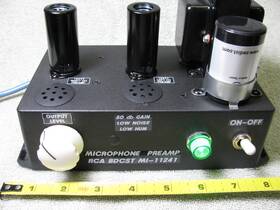
( Brand: Rca ), ( Manufacturer Part Number: MI-11241 ), ( Part Type: Tube Microphone Preamp ), ( Form Factor: Microphone Preamp ), ( Connectivity: Wired ), ( Features: Adjustable Gain ), ( Transducer Type: Dynamic ), ( Suitable For: Broadcasting ), ( Country Of Origin: United States )
Review RCA Clone From The Tube Microphone Preamp Broadcast/2026 Clone. Excellent
The **RCA Clone 1960s MI-11241 Tube Microphone Preamp (12AY7 Broadcast/2026)** is a meticulously crafted vintage-inspired audio component that pays homage to the golden era of broadcast and studio engineering, when warmth, clarity, and uncompromising craftsmanship defined the sound of radio, television, and early recording. Designed as a direct homage to the legendary RCA MI-11241 preamplifier originally used in high-end broadcast consoles and recording studios of the mid-20th century this modern interpretation captures the essence of its tube-driven architecture while incorporating contemporary reliability and performance. At its heart lies the **12AY7/2026 pentode**, a dual-triode tube renowned for its smooth, low-noise amplification and rich harmonic character, which was a staple in vintage broadcast gear for its ability to handle both dynamic and delicate signals with grace. The preamp s design draws inspiration from the era s emphasis on **clean, transparent gain staging**, where the tube s natural compression and subtle harmonic distortion were embraced rather than masked, lending recordings a lush, slightly "open" quality that modern solid-state circuits often struggle to replicate. The chassis, constructed from heavy-gauge steel and finished in a matte black or vintage silver tone, exudes a retro aesthetic while ensuring structural integrity and minimal audio interference. Inside, the circuit is laid out with precision, featuring high-quality resistors, capacitors, and transformers that mimic the impedance and tonal characteristics of original RCA components, including the signature **low-impedance input** (typically 200 ohms) that was standard in broadcast applications, allowing it to interface seamlessly with vintage microphones, ribbon mics, and dynamic instruments without coloration. The preamp s gain structure is thoughtfully calibrated to deliver **approximately 40-50dB of clean gain**, sufficient for most microphone-level signals while maintaining headroom for further processing, much like its broadcast predecessors. A key feature of this clone is its **broadcast-grade output**, designed to drive line-level devices with minimal noise and distortion, making it ideal for studio monitoring, live sound reinforcement, or as a front-end for vintage-style recording chains. The inclusion of a **phantom-powered 48V switch** (optional) further enhances its versatility, allowing it to power condenser microphones while retaining the tube s organic character. For purists, the preamp includes a **tube socket for easy replacement**, ensuring longevity and the ability to swap in different tubes (such as a 12AX7 for a slightly brighter response) to tailor the sound to specific applications. Whether used as a standalone preamp, in a DIY console build, or as part of a modular audio system, this RCA-inspired design bridges the gap between history and modern audio engineering, offering a tangible connection to the golden age of tube amplification while delivering the reliability and performance expected of contemporary gear. Its presence in a studio or live setup is immediately recognizable not just for its aesthetic, but for the subtle, musical warmth it imparts to every signal it touches, a testament to the enduring allure of tube circuitry.
### Pros and Cons of Buying an RCA Clone 1960s MI-11241 Tube Microphone Preamp (12AY7, Broadcast/2026)
---
#### **Pros**
1. **Authentic Vintage Sound** The MI-11241 was a staple in broadcast and recording studios during its era, known for its warm, smooth, and slightly colored tone. A well-made clone can replicate this character, offering a nostalgic and sought-after sound that many engineers and musicians value for its "vintage warmth."
2. **Reliable Tube Circuitry** Tube preamps like this one are celebrated for their natural compression, harmonic richness, and dynamic response. The 12AY7 tube (a variant of the 12AX7) is a workhorse in audio circuits, providing a balanced blend of gain and low noise, which is ideal for microphones.
3. **Broadcast-Grade Build** The original MI-11241 was designed for professional use, meaning it was built to handle high-quality signals with minimal distortion. A clone that stays true to this design will offer stability and performance comparable to its original counterpart.
4. **Versatility** The preamp can be used with a variety of microphones, including dynamic and condenser types, making it a flexible tool for different recording scenarios. Its gain structure is often well-suited for both close-miking and room mics.
5. **Aesthetic and Historical Value** For enthusiasts, owning a piece of broadcast history adds a layer of satisfaction. The look and feel of a vintage-style preamp can enhance a studio s ambiance, appealing to those who appreciate classic design.
6. **Lower Maintenance Than Some Alternatives** While tube gear requires occasional tube replacements, the 12AY7 is a durable tube with a long lifespan compared to others. A clone should be designed with this in mind, reducing long-term hassles.
7. **Potential for Customization** Some clones offer modularity or upgrade paths (e.g., swappable tubes, adjustable components), allowing users to tweak the sound to their liking over time.
8. **Cost-Effective Alternative to Originals** Authentic MI-11241 preamps from the 1960s can be extremely expensive or difficult to find. A high-quality clone provides similar performance at a fraction of the cost, making it accessible to hobbyists and professionals alike.
---
#### **Cons**
1. **Tube Reliability and Lifespan** Tubes eventually wear out and may fail unexpectedly, requiring replacements. While the 12AY7 is reliable, it s not immune to this issue, and you ll need to budget for spares (typically every few years, depending on usage).
2. **Power Supply Sensitivity** Tube circuits are sensitive to power supply fluctuations, noise, or poor grounding. A poorly designed clone could introduce hum, distortion, or instability if not properly shielded or powered.
3. **Higher Noise Floor Compared to Modern Solid-State** While tube preamps are low-noise by vintage standards, they are generally noisier than modern solid-state or high-end FET preamps. This may be noticeable in ultra-quiet recordings or when using sensitive microphones.
4. **Limited Gain Range** The MI-11241 s gain structure is moderate, which can be limiting for modern recording techniques that often require higher gain stages. Some users may find it insufficient for certain microphones or signal levels.
5. **Weight and Bulk** Tube preamps are heavier and larger than their solid-state counterparts. This can be a drawback if space or portability is a concern.
6. **Learning Curve** Operating tube gear requires understanding tube behavior, proper handling, and sometimes manual adjustments (e.g., tube warm-up, gain staging). Beginners may find this more challenging than plug-and-play solid-state equipment.
7. **Potential for Inconsistency in Clones** Not all clones are created equal. Lower-quality clones may lack the attention to detail in components, wiring, or shielding, leading to a less authentic or less reliable performance. Researching the manufacturer s reputation is crucial.
8. **Power Consumption** Tube preamps draw more power than solid-state units, which can be a consideration for studios with limited electrical capacity or those using older wiring.
9. **Resale Value** While vintage audio gear can appreciate over time, clones (even high-quality ones) typically do not hold the same resale value as originals. If you plan to sell later, this is a factor to consider.
10. **Compatibility Issues** Some modern audio interfaces or mixers may not integrate seamlessly with tube preamps, especially if they lack proper grounding or require phantom power (though the MI-11241 is phantom-powered, it s not always compatible with all setups).
---
### **Conclusion**
The RCA clone of the 1960s MI-11241 tube preamp is a compelling choice for those who prioritize vintage warmth, tube character, and broadcast-quality sound. It excels in scenarios where authenticity, dynamic response, and a slightly colored tone are desirable such as recording vocals, acoustic instruments, or analog-style production. However, it is not without trade-offs: the need for tube maintenance, higher noise, and potential compatibility issues may deter users who prefer the convenience of modern solid-state gear.
For **enthusiasts, vintage audio collectors, or professionals working in analog or vintage-inspired recording**, this preamp is a worthwhile investment. It offers a unique sonic signature that is hard to replicate with digital or modern tube alternatives. On the other hand, **beginners, minimalists, or those prioritizing low maintenance and high gain flexibility** may find it less practical compared to contemporary options.
---
### **Recommendation**
If you are drawn to the sound and heritage of the MI-11241 and are willing to embrace the minor inconveniences of tube gear, **purchase a clone from a reputable manufacturer** (e.g., companies like **Audio Research, Grace Design, or well-reviewed independent builders**). Prioritize clones that:
- Use high-quality components (e.g., proper shielding, low-noise transformers).
- Include a warranty or support for tube replacements.
- Have positive reviews for sound accuracy and reliability.
**Test it in your setup** before committing to a purchase if possible. Pair it with a stable power supply and ground system to minimize hum or instability. If you re unsure about tube maintenance, consider starting with a **hybrid approach** (e.g., a tube preamp followed by a modern interface) to ease into the workflow.
For most users, the **MI-11241 clone is best suited as a specialized tool** rather than a primary preamp. If you re recording a variety of sources, you may still want a solid-state preamp for versatility. Ultimately, the decision depends on your priorities: **sound character vs. convenience, nostalgia vs. practicality.**
Details:
Unlike the original This is made in high impedance since there are musicians still using HI-Z mics. The 12AY7 tube are still being made and sold today one of the best preamp tubes to date. It can easily be converted to low impedance 150 ohm microphones with Electrifies 502CP and similar Shire transformers. These tube broadcast preamps are still wanted today due to the high quality that solid state can't compare.
This is a slightly used unit in great working condition and looks like new. This is an exact replica of the famous RCA MI-11241 STEREO microphone pre amplifier used in broadcast consoles late 50s and early 60's. Although rather expensive. It has a very clean overall gain of 50-55 db.
The quality is absolutely superb with very clean, quiet, warm tube of the years gone by.
part #: mi11241 prices
- $59.99-$150.00
specifications micwisys:
- brand: Rca
- mpn: Mi-11241
- part type: Tube Microphone Preamp
- form factor: Microphone Preamp
- connectivity: Wired
- features: Adjustable Gain
- transducer type: Dynamic
- suitable for: Broadcasting
- country of origin: United States
seller micwisys:
- rating: 100.0%
- # reviews: 1942
- city: Holland, Michigan
payments micwisys:
- credit card: MasteRcard
- wallet: Google-pay
- other
returns micwisys:
- policy: No Returns
offer micwisys:
- best offers: True
- started: April 8, 2026
- sold: 0
- options: Ship-to-home
- availability: In Stock
- quantity: 1
shipping micwisys:
- service: USPS Ground Advantage
- cost: $37.50
- class: Standard
- transit: 5-10 Days
- carrier: USPS
- type: Fixed
general micwisys:
- condition: Used
- Musical Instruments Gear > Pro Audio Equipment > Microphones Wireless Systems
Rca MI-11241 Is Similar To:
- 44-bx Rca Ribbon Microphone From (31.3% similar) Rca 44-BX ribbon microphone. Every studio needs one. Wonderful, vintage tone for vocal, string instruments, horns, you name it. I am rural and have two ups pick-ups USPS per week. Good vintage condition see the many pictures. With blemishes and dents from being an over 50 year old mic. I added the ...(May 5th, 2017)
- 77-d Ribbon Rca Type Microphone Vintage Mint (28.8% similar) Sounds great on many sources with that special ribbon sound. Very cool mint Rca 77-D mi ribbon microphone. Includes original box. Please see the pics. Mic works great. Value, it has to be USPS express. Nice vintage tone on vocals. Buyers pay for return shipping...(December 19th, 2016)
- 77-dx Rca Vintage Ribbon Microphone Mi-4045-f (32.7% similar) Openings smaller or larger than this critical size produce directional patterns with various sized rear lobes. Numerous other applications of the various direct tonal patterns as well different response curves will no doubt suggest themselves to user. Refer to figure 5 for the frequency-response ...(March 2nd, 2017)
- 77b Rca 1 Ribbon Microphone Professionally (38.9% similar) The type 77-B1 unidirectional microphone can be used to excellent advantage in practically any of studio installation. In a given studio, the type 77-B1 micro phone can he used with approximately functionally it is fantastic and ready to go work for you. It can also be used to advantage in small ...(March 10th, 2017)
- Bk11 Rca Ribbon Microphone Superb Tone (35.7% similar) Works perfectly. Rca BK11 a ribbon microphone. Considered by many as the best microphone Rca ever made. Superb on vocals, overhead, guitar amps, etc. I am rural and have two ups pick-ups USPS per week. Excellent condition with minor pencil marking on the mic body see pic...(August 12th, 2018)
- Dx77 Rca 77dx Ribbon Microphone (27.1% similar) I am rural and have two ups pick-ups USPS per week. Overall, looks very nice. Every studio needs one. Rca 77DX ribbon microphone. Has XLR cable installed and stand adapter, so it will fit to any common mic. Great vintage condition see the pictures. Sounds excellent. Wonderful, vintage tone for vocal...(February 23rd, 2018)
- Jrs-34a Cloud Microphones Microphone Active Professional Studio Ribbon Sank Rca (32% similar) Designed by the famous ribbon mic expert Stephen sank named after his fathers initials, and sounds similar to early Rca mics. It looks and sounds fantastic, includes its wood en foam lined case. Up for sale is a cloud microphones JRS-34 active bi-directional ribbon microphone...(August 3rd, 2018)
- Mi-11006-c Rca 20 Type 77-c From (22.4% similar) Male XL vintage r c a 77-C phone red badge 1939 there is book with the history of radio station going back to day over 100 newspaper story about tam Charleston all item are included...(February 18th, 2017)
- Pb90 Rca Pb-90 Ribbon Microphone (26.9% similar) The mic sounds warm and beautiful. Perfect addition to any studio. Rca PB-90 ribbon microphone. Over 70 year old treasure. Ribbon in great shape, and new XLR cable recently installed. Has dents and blemishes, as it is a vintage piece, but sounds excellent. It has a sturdy, non adjustable mic ...(August 14th, 2017)
- 77c1 Rca Ribbon Microphone Professionally Serviced Sounds Amazing (34.7% similar) Ready to record this mic is in very good condition, especially considering it's age. Who we are music square is the retail subsidiary of Benton pro audio. Functionally it is fantastic and ready to go to work for you. Please request a quote. For all return questions, call us at...(September 18th, 2016)
- 77-dx Rca Type Microphone W Original Stand (33.3% similar) This legendary, vintage 77 DX microphone has been completely refurbished by Clarence Kane at Eng microphone repair. Domestic us. The 77 DX is poly directional. The three available patterns are unidirectional, cardio id and figure 8 bidirectional. As shown, the original Rca stand is included. The ...(September 27th, 2016)
