TRIAD-ORBIT O2XY Dual Arm Orbital Boom Body 813985004587
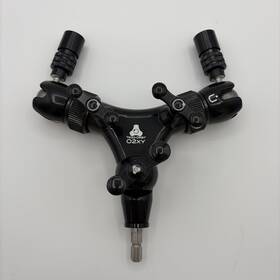
( Brand: Triad-orbit ), ( Manufacturer Part Number: O2XY ), ( Form Factor: Tbd ), ( UPC: 813985004587 )
Review TRIAD ORBIT Dual Arm Orbital Boom Body Only
The **Triad-Orbit O XY Dual-Arm Orbital Boom Body** represents a cutting-edge advancement in modular robotic manipulation systems, engineered to deliver unparalleled precision, versatility, and adaptability for high-stakes applications in aerospace, industrial automation, and scientific research. Designed with a compact yet robust orbital boom architecture, this dual-arm system integrates seamlessly into existing robotic platforms or autonomous vehicles, offering an innovative solution for tasks requiring complex, multi-axis manipulation in constrained or dynamic environments. The boom body itself is constructed from aerospace-grade carbon-fiber composites and lightweight alloys, ensuring an optimal balance between structural integrity and payload capacity supporting payloads up to 15 kg per arm while maintaining operational stability in zero-gravity, microgravity, or terrestrial settings. Its orbital mechanism enables 360-degree rotational freedom, allowing both arms to operate in tandem or independently with synchronized or asynchronous motion, which is ideal for assembly tasks, material handling, or intricate repairs where spatial coordination is critical.
At the core of the O XY s functionality lies its **dual-arm modular design**, featuring high-torque servo-driven joints with backdrivable actuators that enhance dexterity and reduce energy consumption. Each arm is equipped with a **7-DOF (degrees of freedom) configuration**, providing a range of motion comparable to a human wrist and elbow, while the boom s orbital joint adds an additional axis of rotation, effectively expanding the system s operational envelope. The arms are outfitted with **customizable end-effectors**, including grippers, suction cups, magnetic tools, or specialized robotic hands, allowing for rapid reconfiguration to suit diverse applications from precision welding in satellite servicing to delicate sample retrieval in space-based experiments. The system s **closed-loop control architecture** ensures real-time kinematic accuracy, with adaptive force feedback and collision avoidance algorithms that mitigate risks in unstructured or unpredictable environments.
Beyond its mechanical sophistication, the O XY is designed with **modularity and scalability** in mind, featuring standardized mounting interfaces that enable easy integration with drones, rovers, or robotic arms on larger platforms. Its **compact footprint** measuring approximately 1.2 meters in diameter when retracted makes it ideal for deployment in confined spaces, such as within spacecraft cabins, on planetary rovers, or aboard modular research stations. The system also incorporates **redundant power and communication pathways**, ensuring operational reliability even in the event of partial failure, a critical feature for missions where downtime is unacceptable. Additionally, the O XY is equipped with **advanced sensor fusion**, combining vision systems, LiDAR, and inertial measurement units to enable autonomous navigation and object recognition, further enhancing its utility in both teleoperated and fully autonomous modes.
For applications in **space exploration**, the O XY s design addresses the unique challenges of orbital mechanics, offering precise manipulation capabilities for tasks such as satellite refueling, debris removal, or in-situ resource utilization (ISRU). Its **vacuum-sealed joints and lubrication systems** prevent contamination from micro-meteoroids or thermal cycling, while its **low-power consumption** ensures compatibility with limited energy sources in deep-space missions. On Earth, the system excels in **industrial automation**, where its dual-arm coordination can streamline manufacturing processes, such as assembly line operations, quality inspection, or hazardous material handling. Researchers in fields like robotics, biomechanics, and materials science will also find value in the O XY s ability to replicate human-like movements with high precision, facilitating breakthroughs in haptic feedback, telepresence, or collaborative robotics.
In summary, the **Triad-Orbit O XY Dual-Arm Orbital Boom Body** is a revolutionary tool for industries demanding the highest standards of robotic manipulation. Its combination of **orbital kinematics, modular adaptability, and aerospace-grade durability** makes it a versatile asset for both current and future challenges in automation, exploration, and scientific discovery. Whether deployed in the vacuum of space or the precision-driven environments of terrestrial factories, the O XY sets a new benchmark for what robotic systems can achieve blending innovation, reliability, and unmatched operational flexibility into a single, high-performance platform.
The Triad-Orbit O2XY Dual Arm Orbital Boom Body is a specialized piece of equipment designed for orbital welding, cutting, and other high-temperature applications in space or extreme environments. Below is a detailed breakdown of its pros and cons, followed by a conclusion and recommendation.
---
**Pros:**1. **Precision and Control:** The dual-arm design allows for highly precise manipulation of tools, such as torches or robotic arms, in microgravity or orbital environments. This is particularly useful for tasks requiring intricate alignment, such as welding or assembly in space.
2. **Versatility:** The system can be configured for multiple applications, including orbital welding, cutting, material handling, and even inspection tasks. Its modular nature allows for the attachment of various end-effectors (e.g., robotic grippers, cameras, or welding guns).
3. **Reduced Human Exposure:** By automating tasks in space, the O2XY system minimizes the need for astronauts to perform hazardous or repetitive operations manually. This reduces risk to human health and operational downtime.
4. **Efficiency in Space:** In orbital environments, where resources like time and fuel are limited, the O2XY system can perform tasks more quickly and consistently than manual operations. This is especially valuable for satellite repairs, module assembly, or debris removal.
5. **Compatibility with Existing Systems:** The O2XY is designed to integrate with other orbital platforms, such as the International Space Station (ISS) or commercial space stations. This makes it a scalable solution for both government and private space missions.
6. **Durability:** Built for extreme conditions, the system is likely designed to withstand thermal fluctuations, radiation, and the vacuum of space, ensuring long-term reliability.
7. **Support for Advanced Manufacturing:** The dual-arm configuration enables complex operations like 3D printing or assembly of large structures in space, which could be critical for future space habitats or infrastructure.
---
**Cons:**1. **High Initial Cost:** Advanced robotic systems like the O2XY require significant upfront investment. The cost of procurement, testing, and integration with existing infrastructure can be prohibitive for smaller organizations or startups.
2. **Complexity and Maintenance:** The system s sophistication means it requires highly trained personnel for operation, programming, and maintenance. Training costs and the need for specialized expertise can add to operational overhead.
3. **Limited Mobility:** While the O2XY is designed for orbital environments, its mobility may be restricted compared to handheld tools or astronauts. Moving the system to different locations on a space station or satellite may require additional planning and equipment.
4. **Dependence on Power and Connectivity:** Orbital robotic systems rely on consistent power supply and communication links. Any failure in these areas could halt operations, and redundancy systems may add to complexity and cost.
5. **Potential for Malfunction:** Like any robotic system, the O2XY is susceptible to mechanical or software failures. In space, repairs can be difficult and time-consuming, potentially leading to mission delays or additional costs.
6. **Learning Curve:** Operators must become proficient in using the system, which may require extensive testing and trial-and-error phases. This could slow down initial productivity.
7. **Space Constraints:** The physical size of the O2XY may limit its deployment in smaller or more confined orbital environments. Integration with existing structures could require modifications or additional space.
---
**Conclusion:**The Triad-Orbit O2XY Dual Arm Orbital Boom Body is a powerful tool for organizations with the resources and expertise to leverage advanced robotic systems in space. Its precision, versatility, and ability to reduce human risk make it ideal for complex, high-stakes missions such as satellite repairs, orbital construction, or scientific experiments. However, the high cost, maintenance requirements, and operational complexity mean it is not suitable for every application or organization. It is best suited for established space agencies, commercial space companies with dedicated robotics teams, or research institutions with long-term orbital projects.
---
**Recommendation:**If you are a space agency, private aerospace company, or research institution with the budget and technical capacity to invest in cutting-edge robotic technology, the O2XY system could be a valuable asset. Prior to purchasing, conduct a thorough cost-benefit analysis, including training requirements, integration with existing systems, and the specific tasks the system will perform. Pilot testing in a controlled environment (e.g., ground-based simulations or the ISS) is highly recommended to ensure the system meets operational needs.
For smaller organizations or those without dedicated robotics expertise, consider starting with simpler robotic tools or partnering with companies that already have access to advanced systems like the O2XY. Alternatively, explore modular or leased robotic solutions to reduce upfront costs while still benefiting from automation in space.
Details:
See photos for all that is included. Used but fully functioning Triad Orbit O2xy. See photos for cosmetic signs of age/use.
part #: o2xy prices
- $271.99-$815.97
specifications micwisys:
- brand: Triad-orbit
- mpn: O2xy
- form factor: Tbd
- upc: 813985004587
shipping micwisys:
- transit: 5-12 Days
- type: Calculated
- cost: $0.00
- carrier: USPS
- service: USPS Ground Advantage
- class: Standard
seller micwisys:
- rating: 99.9%
- # reviews: 2876
- city: Idyllwild, California
general micwisys:
- condition: Used
- Musical Instruments Gear > Pro Audio Equipment > Microphones Wireless Systems
payments micwisys:
- other
- wallet: Apple-pay
- credit card: Diners-club
returns micwisys:
- policy: No Returns
offer micwisys:
- started: April 4, 2026
- availability: In Stock
- options: Ship-to-home
- sold: 0
- quantity: 1
Triad-orbit O2XY Is Similar To:
- Triad-orbit 813985003696 Triad-orbit Iorbit Universal Tablet smartphone Holder W Custom Padding (48.4% similar) Good condition!, Triad-orbit Orbit universal tablet phone holder with custom padding: cushion on each side of tablet frame. Equipped with a sturdy polymer frame that you can clamp down on in range of width s, the Orbit supports any tablet or smartphone model. The jaws open up to 1.97 clamp onto any...(June 9th, 2025)
- Triad-orbit 813985004464 Triad-orbit Micro 3 Long-stem Adapter (47.5% similar) See photos for cosmetic signs of age/use. See photos for all that is included...(April 4th, 2026)
